News
AI Workshop Recap: From Theory to Practical Application
This workshop recap highlights how businesses can develop practical AI capabilities through structured methodologies, emphasizing problem-solving over technology. It covers the C.R.E.A.T.E. framework, real-world applications, and strategic implications for leaders, focusing on AI as an organizational capability rather than a technical project.
Key Takeaways
- Effective AI use is a learnable skill: a structured method matters more than the tool you use.
- The C.R.E.A.T.E. framework (Context, Role, Explicit task, Audience, Tone and format, Examples) turns vague requests into precise instructions and makes the output noticeably better.
- Measure AI ROI by improved output quality and new problem-solving capacity, not only by time saved.
- Build human capability and internal standards before buying platforms, and treat AI adoption as continuous learning rather than a one-time project.
Building Business-Ready AI Capabilities Through Structured Methodology
Yesterday, I facilitated a five-hour transformation that I never tire of witnessing: the moment business professionals realize that artificial intelligence isn't magic. It's a learnable skill that can be structured and systematically applied.
The workshop at the Center for Digital Transformation began as many before it did. Twenty experienced business professionals, laptops open, held expectations mixed with healthy skepticism. The unspoken question lingered: "How will I actually apply this tomorrow at the office?"
Starting with the Problem, Not the Technology
I deliberately chose not to start with tools. That's the common trap: reaching for technology before understanding the problem. Instead, I challenged the group: write a prompt that will extract a usable report from an AI system for your client. No guidelines, no structure. Just try.
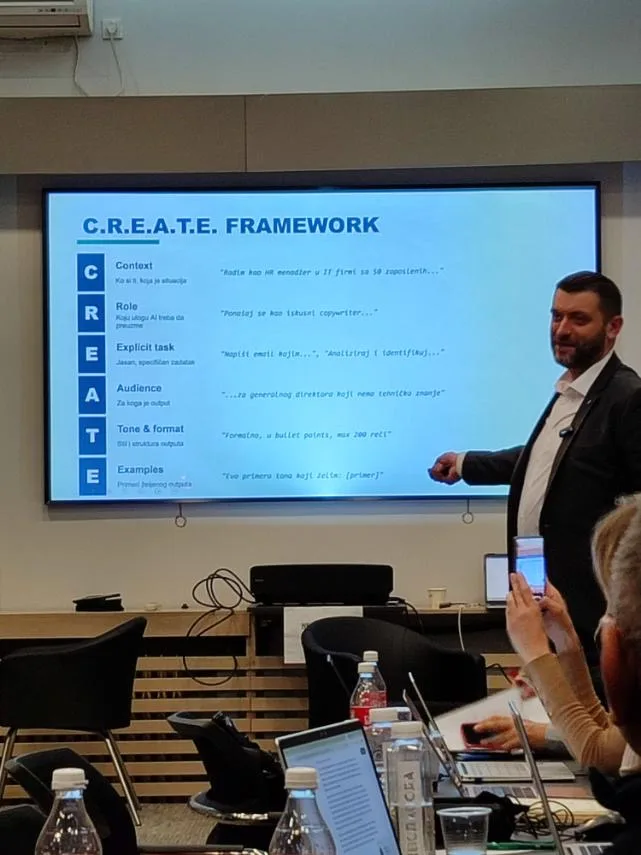
The results were predictable: generic responses, surface-level analysis, and content no one would endorse. Then we introduced the C.R.E.A.T.E. methodology: six dimensions that transform vague requests into precise instructions:
- Context that sets the stage
- Role that defines perspective
- Explicit task with no room for interpretation
- Audience that directs tone
- Tone and format that structure output
- Examples that demonstrate expected standards
Same people, same task, different structure. The difference in output quality was dramatic. What truly encouraged me wasn't just the better result, but the moment participants grasped a deeper truth: Artificial intelligence isn't here to replace their thinking. It's here to amplify their ability to formulate problems, structure requests, and control processes. That's a fundamentally different relationship with technology.
From Generic Prompts to Business-Ready Outputs
Through hands-on exercises, we worked through various business scenarios from their actual organizations, including market trend analysis for a manufacturing company, communication strategy development for public administration, and reporting automation for finance functions. In each instance, the same lesson emerged: precision in prompting directly translates to the usability of results.
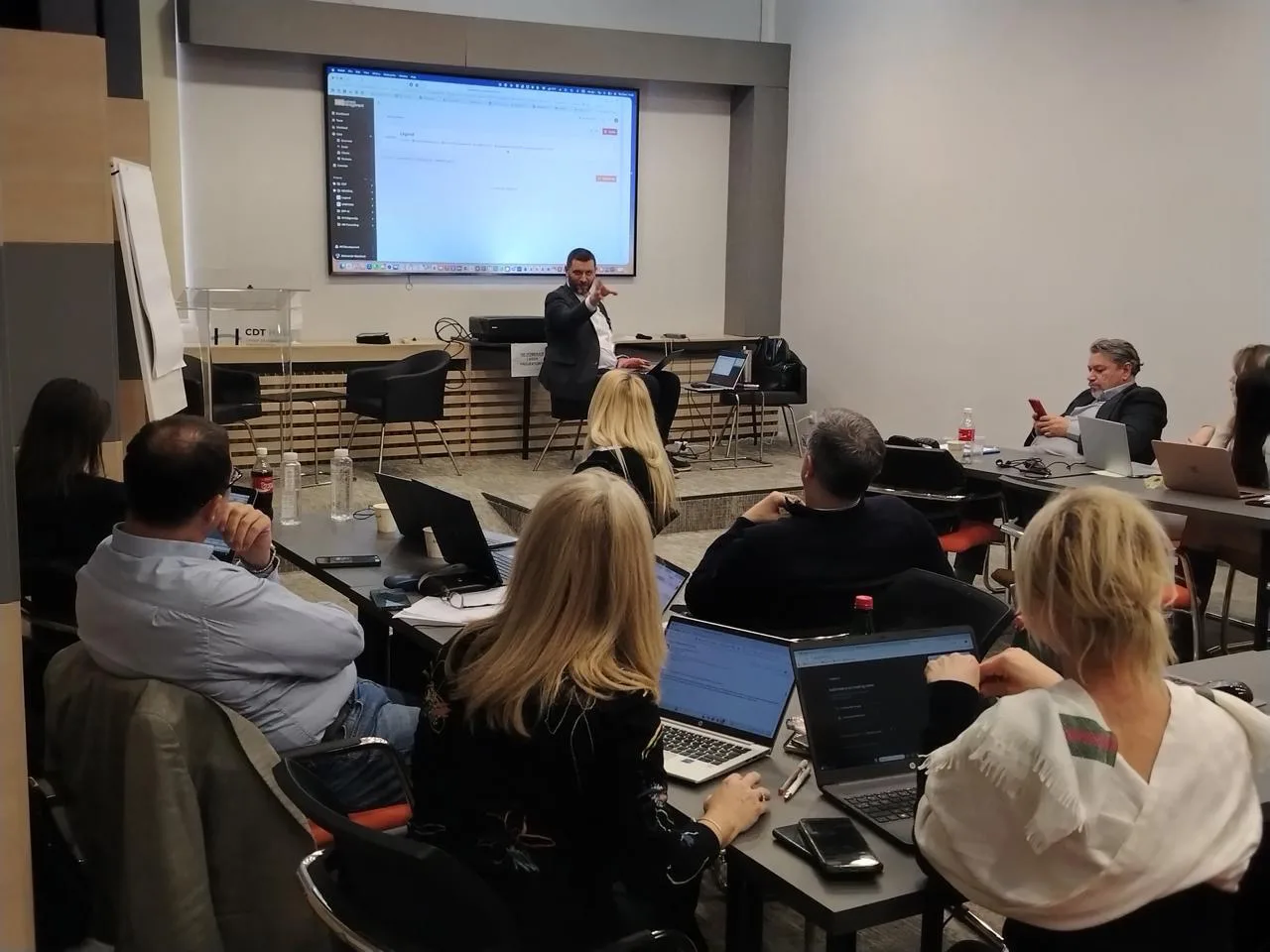
What we achieved wasn't a theoretical demonstration, but tangible outcomes. Each participant left with working templates for their top three use cases, ROI calculations for their functions, and the confidence to implement them immediately. This highlights the difference between workshops that inspire and those that build capability.
AI as Organizational Capability, Not a Technical Project
What's often missing from conversations about artificial intelligence is the acknowledgment that we're discussing organizational capability, not merely a technical project. Companies that succeed aren't those that buy the most expensive tools first; they're the ones that systematically build knowledge, document approaches, and measure results.
This necessitates investment in training across all functions, not just technical teams. It means developing internal standards for AI use, rather than relying on ad-hoc experimentation. It requires discipline in measuring return on investment through concrete indicators, not theoretical projections.
The Western Balkans boasts a talented workforce and strong adaptability. What we consistently lack is a systematic approach to building new capabilities. The Center for Digital Transformation aims to fill that gap, but only if organizations understand that technological transformation begins with people, not with software.
Three Key Takeaways That Change Perspective
First: Methodology Over Technology
Artificial intelligence is not primarily a question of technology, but of methodology. Without a structured approach, results will be inconsistent, regardless of how powerful the tool. This means a small team with clear frameworks can outperform a large team with chaotic approaches. The competitive advantage no longer comes from merely having access to AI. Everyone has that now. It comes from knowing how to use it systematically.
Second: Redefining ROI Metrics
Return on investment from artificial intelligence is not measured solely in time saved, but in improved output quality and expanded capacity to solve complex problems. The success metric isn't "how much faster did we finish," but "what can we now accomplish that we couldn't before." This shift in measurement fundamentally changes how you evaluate AI adoption's success and where you direct implementation efforts.
Third: Continuous Learning as Strategy
The fastest-moving organizations treat AI adoption as a continuous educational initiative, not a one-time implementation project. This involves building institutional knowledge through documented best practices, rather than relying on individual experts. When your AI capability depends on one person who "gets it," you don't have organizational capability. You have organizational risk.
Strategic Implications for Leadership
If your organization plans a serious integration of artificial intelligence this year, start by developing human capabilities before investing in technology. The worst strategy is to purchase a platform and then figure out how people will use it. The best strategy is to first understand where your business problems lie, build capacity for structured approaches to solving them, and then select tools that support that approach.
This is the key differentiator between organizations that merely experiment with artificial intelligence and those that integrate it as a competitive advantage. The former chase features; the latter builds capabilities.
What's Next
The next round of programs is in preparation, focusing on sector-specific AI applications for regulated industries. Organizations looking to move beyond experimentation to systematic integration are invited to explore our capability-building approach.
For program calendar and inquiries: cdt@pks.rs
- #AI
- #Digital Transformation
- #Education
- #Training
- #CDT
- #Serbia

About the Author
Aleksandar Mastilovic
20+ years of helping organizations with digital transformation, 5G rollout, and smart city development.
Questions & Answers
Frequently Asked Questions
What is the C.R.E.A.T.E. prompt framework?
C.R.E.A.T.E. is a six-part prompting method: Context sets the scene, Role defines the perspective, Explicit task leaves no room for interpretation, Audience sets the tone, Tone and format shape the output, and Examples show the expected standard.
What did participants take away from the workshop?
Each of the twenty participants left with working templates for their top three use cases, ROI calculations for their functions, and the confidence to apply them immediately. Exercises covered real scenarios such as market trend analysis, public administration communication strategy and finance reporting automation.
How should an organization start integrating AI?
Start with people, not software. First find where your business problems are, build the skills to solve them in a structured way, and only then choose tools that support that approach. Buying a platform first and working out how to use it later is the worst strategy.
Keep Reading
 AI
The AI That Cracks Zero-Days: Why You Can't Have It and What It Means for Your Organization
Anthropic's Claude Mythos Preview is the most capable cybersecurity AI ever documented. The company's decision to withhold its public release and instead launch Project Glasswing, a defensive program for critical infrastructure organizations, reveals the accelerating risks and geopolitical implications of advanced AI. This post explores Mythos's capabilities, the insights from its system card, and the urgent implications for CISOs, engineering leaders, C-suite executives, and compliance officers.